Learning Hub
The learning playbook for practitioners. Real tools, real case studies, and real lessons from Coalition members and guest practitioners working with smallholders on the ground.



Blogs and News
Field notes and news from across the Coalition.
Category
News
Events
Thought Leadership
Field Notes
Insights & Data
Member Spotlight
Clear all

What Adaptation Looks Like When the Rains Fail & Fertilizer Runs Short

The Hidden Food-System Shock in the Strait of Hormuz

Skoll 2025 – New Momentum & New Members

The Regen Ramp Up: Scaling Effective Climate Action by Smallholders
Deploying Rock Weathering to Support Smallholder Livelihoods and Carbon Removal

Unlocking the Potential of Smallholder Agroforestry Through Access to Finance: Insights from the CASH Coalition Panel at Climate Week

CASH OpEd on the pernicious impacts of European regulation on smallholder commodity producers

CASH Coalition Press Release: Farmer Voice Report Highlights Smallholders’ Crucial Role in Advancing Climate Action and Regenerative Agriculture

We spoke to smallholder farmers about how to mitigate climate change. They want to help.
A living toolkit of vetted regenerative practices from the practitioners who tested them in the field: what worked, what didn’t, and what is needed to scale. Built for practitioners who want proof before they invest their own farmers’ time and resources.



Peer Learning
Sessions where members and guest experts trade lessons on the challenges they’re facing and innovations in smallholder regenerative agriculture.
Topic
Regenerative Agriculture
Finance
Carbon Markets
Digital Tools
Land Rights
Adaptation
Clear all

From Hormuz to Harvests: How the Strait Crisis Is Impacting Farmers and Food Systems
Francisco Martin-Rayo from Helios AI
A shipping chokepoint half a world away can still decide whether a farmer eats this season. In this session, Francisco traced how the Strait of Hormuz crisis rippled through farmer livelihoods and food systems most people never connect to geopolitics.

The Road from Belém: Reflecting on COP30 Advocacy and Looking Ahead
Forest Trends, Landesa, One Acre Fund, Root Capital, and SEKEM
COP30 came and went, and smallholder advocacy didn't stop with it. In this peer-to-peer session, we learned more about what the Coalition's advocacy in Belém actually landed, what fell flat, and where that work headed next.

Weather Forecasting for Smallholders: AI and Climate Disruption
Andrew Lala (ignitia), Anjaney Singh & Madhav Vaidyanathan (PxD)
A forecast that's off by a day can cost a farmer the whole season. In this peer-to-peer session, Andrew, Anjaney, and Madhav showed how AI-powered forecasting got farmers accurate, localized information in time to act on it.

Key Trends in the Voluntary Carbon Market (2025 Report)
Alex Procton & Charlotte Barber (Forest Trends)
The voluntary carbon market moves fast, and what worked last year might not work this year. In this peer-to-peer session, Alex and Charlotte broke down what the 2025 data meant for smallholder-focused carbon projects.

Advancing Free, Prior and Informed Consent (FPIC) Practices
C. Chilangwa (Mafisa), J. Robalino (Landesa), M. Halla (Forest Trends)
Free, Prior, and Informed Consent gets talked about a lot and done well rarely. In this peer-to-peer session, Chileshe, Juan, and Marcio broke down what FPIC actually looked like on the ground, and what it took to get right before projects moved forward.

Monitoring & Evaluation in Carbon and Climate Finance Projects
Pamela Kalimukwa (Mafisa), Seong Hah Cho (Proximity Designs)
Funders and buyers don't take impact claims on faith anymore. In this peer-to-peer session, Pamela and Seong Hah walked through the monitoring and evaluation that made carbon and climate finance claims hold up to scrutiny.

Enhanced Rock Weathering (ERW) Peer 2 Peer session
Caitlin Mckee (PxD), Shantanu Agarwal (Mati), Wiekert Visser (Sekem)
Enhanced rock weathering looks great in a lab. Getting it onto a smallholder's field is a different problem entirely. In this peer-to-peer session, Caitlin, Shantanu, and Wiekert compared notes on what it actually took to make it work, from logistics to farmer adoption to measuring the carbon removed.

Work and Trials on Regenerative Agriculture
Claire Brosnihan (One Acre Fund)
Regenerative claims are easy to make and harder to prove. In this session, Claire shared hard numbers from on-the-ground trials, what moved the needle on yields and soil health, and what didn't.

Financing Regenerative Agriculture (Blended Finance/Impact Investing)
Rex Raimond (TIFS)
Smallholder-facing businesses sit in a gap too risky for banks and too small for most investors. In this session, Rex showed how blended finance closed that gap and de-risked capital for the businesses farmers relied on.

Indigenous Peoples and Local Communities’ Land Rights & Carbon
Juan Robalino (Landesa)
Carbon projects built on shaky land rights tend to collapse, fast. In this session, Juan made the case that secure land tenure for Indigenous peoples wasn't a nice-to-have. It was what made carbon outcomes credible at all.

Leveraging Remote Sensing for Smallholder Climate Work
Darcy Gray (1AF)
You can't improve what you can't measure, especially across millions of small plots. In this session, Darcy showed how satellite data tracked farmer practices at scale, backing both program decisions and climate finance claims.

Exploring Carbon Readiness for Africa’s Restoration Champions
Isabel Harrington (WRI / TerraFund)
Good restoration work doesn't automatically unlock carbon finance. In this session, Isabel laid out the data, MRV, and capacity gaps keeping strong African restoration projects locked out of carbon markets.

Artificial Intelligence for Regenerative Agriculture (Farmer.Chat)
Jona Rapishti (Digital Green)
Most farmers can't call an agronomist when a crop starts failing. Now they could text one. In this session, Jona introduced Farmer.Chat, the AI tool that put expert advice into farmers' hands and adapted it to local conditions.

Net Zero Commitments & Insetting
Elizabeth Teague (Root Capital)
Corporate net zero pledges often leave smallholders out of the deal. In this session, Elizabeth explained how insetting flipped that, letting companies invest directly in the supply chains farmers depend on.

Upscaling Regenerative Farming in Egypt to 40,000 Farmers
SEKEM / Heliopolis University
Most pilots never make it past a few hundred farmers. This one scaled to 40,000. In this peer-to-peer session, we learned more about the training systems and incentives that made that leap possible.

Opportunity: Biological Products for Smallholder Regenerative Agriculture
Thet Wai (Proximity Designs)
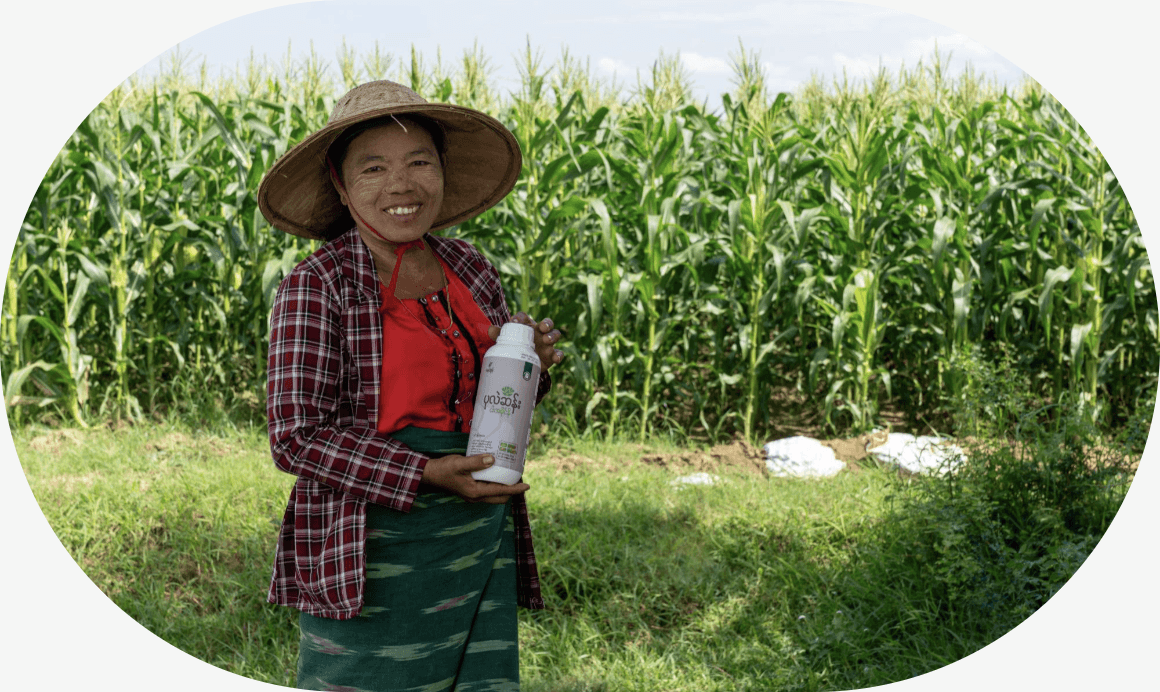
Chemical fertilizer is expensive and getting more expensive. In this session, Thet showed how biological inputs build healthier soil for smallholders without it, and where the model was ready to scale.
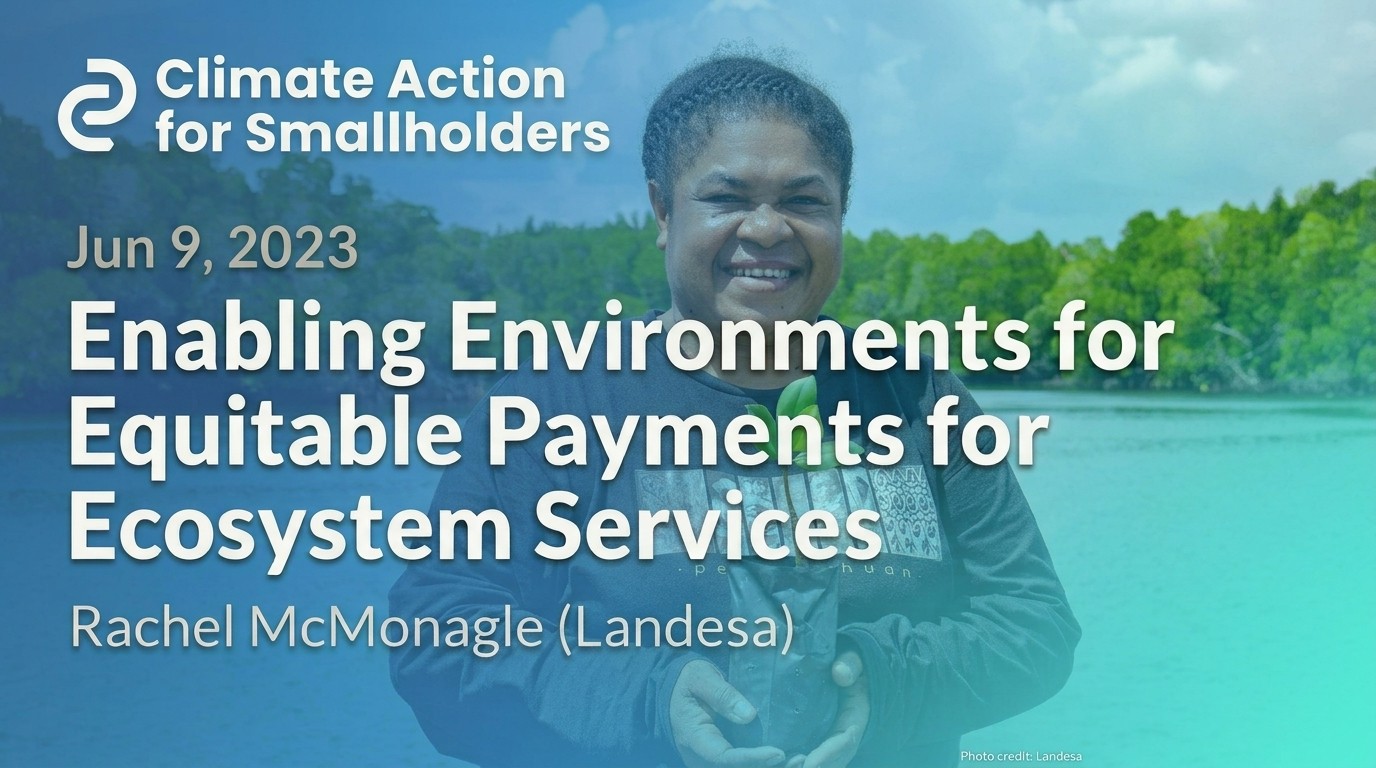
Enabling Environments for Equitable Payments for Ecosystem Services
Rachel McMonagle (Landesa)
Payment schemes for ecosystem services look great on paper and routinely fail in practice. In this session, Rachel walked through the land rights and legal groundwork it takes to get that money to the farmers who actually earned it.
Reports & Resources
Our research, investment analyses, and progress reports in one place.


CASH Coalition 2023 Annual report
The CASH Coalition is one year old. We work to make regenerative agriculture and climate action profitable for smallholder farmers in the Global South. Since our launch at the Skoll World Forum in 2023, we have embarked on a process of learning and doing to realize this mission. We are pleased to present an overview of key activities in this document.
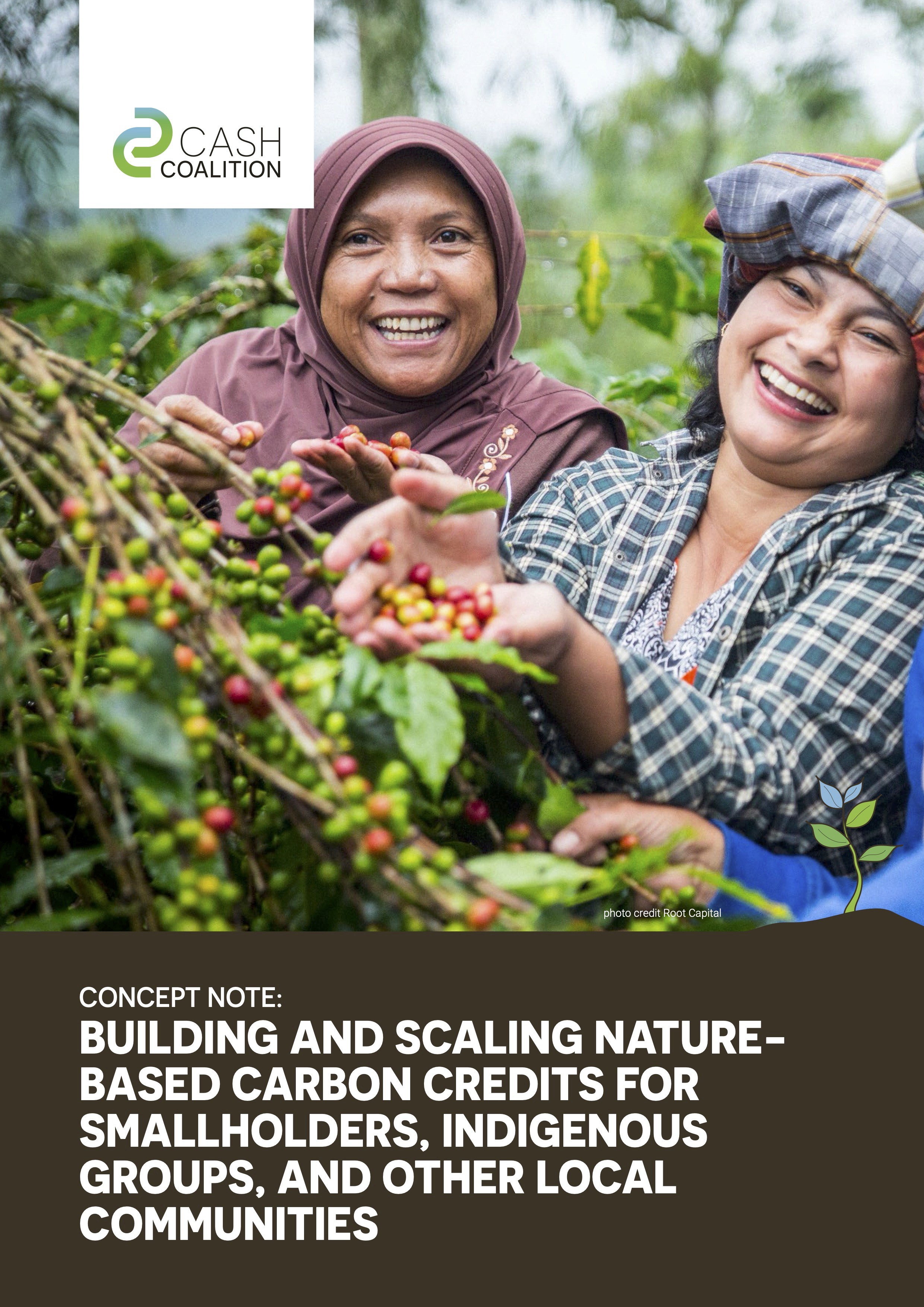
CASH Carbon Credits
Smallholder farmers are vital climate actors, yet carbon markets largely exclude them. This concept note lays out a bold agenda to redesign climate finance — centering equity, agency, and impact. The CASH Coalition outlines principles, barriers, and pathways to ensure smallholder-led regenerative agriculture is visible, viable, and valued in global carbon systems.

Farmer Voice Report
In 2023, the CASH Coalition conducted a survey to uncover insights into how smallholder farmers view themselves in the context of regenerative agriculture and climate change. This Farmer Voice Report collates the findings of that survey.
