What Adaptation Looks Like When the Rains Fail & Fertilizer Runs Short
←
Learning Hub
Climate Action for
Smallholders Coalition

This week the world marks the International Day of Rural Women (October 15) and World Food Day (October 16). In 2026, we will celebrate the critical role of women in rural economies and the importance of healthy food systems against a startling backdrop: a record El Niño, persistently high diesel and input prices, inflationary pressures, rising interest rates, and narrowing horizons for family farmers everywhere.
This year’s World Food Day calls for innovation. Our members have been answering that call for years. Now these innovators are turning their tools toward the shock that’s already here.
On September 21, sea surface temperatures in the central Pacific hit 3.08°C above average, breaking a record set in 2015, and the World Meteorological Organization expects a peak as high as 3.6°C this northern hemisphere winter. "The fact that it has already exceeded previous records, with several weeks to go before it peaks, shows the enormity of this El Niño," Adam Scaife of the United Kingdom’s Met Office told the Financial Times on September 23.

WMO graphic showing heightened sea temperatures in the eastern Pacific. Source: https://library.wmo.int/viewer/69917/
In preparation for our Climate Week panel on 24 September, we asked our members to share what they were seeing in their farmers' fields. KickStart International shared photographs from Rusizi, in Rwanda's Western Province, where persistently dry, hot conditions since May have stressed vegetable crops; the rains are late, and farmers fear that when they come, they will come too hard or at the wrong point in the cropping cycle.

Parched fields in Rusizi, Rwanda's Western Province. Photo: KickStart International.
Acceso shared images from El Salvador's 2026 maize plantings that show the same stress from another angle (below). By late August, Acceso’s field teams had assessed 3,368 maize farmers: about 42% have already been negatively impacted by adverse weather effects or are at risk. In Nueva Concepción, some farmers report losing 90 to 100% of their maize crop.

Even when plants set cobs, the grain is incomplete, uneven, and low quality.

Photos: Acceso
Coalition ally Babban Gona shared insights from northern Nigeria: a drought-stunted maize stand in Karaye, Kano State, a short walk from a healthy one; and a field in Lere, Kaduna State, waterlogged, roots drowning.

Karaye, Kano State, Nigeria: a drought-stunted, patchy maize field next to a healthy one nearby. Photo: Babban Gona.
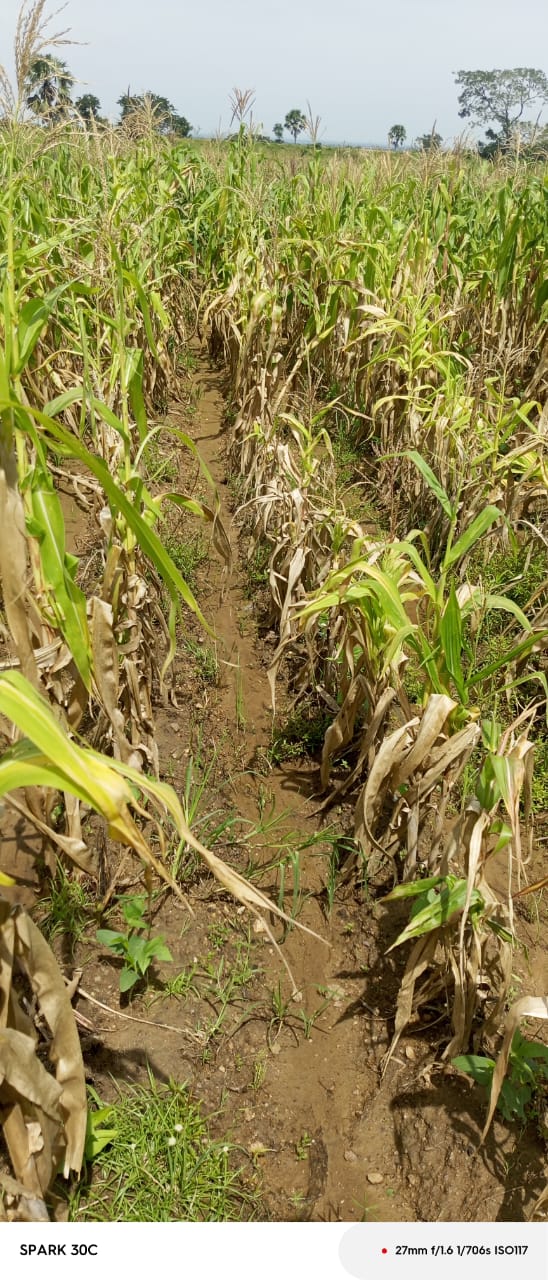
Lere, Kaduna State, Nigeria: standing water and root stress from too much rain. Photo: Babban Gona.
Some geographies, including parts of North and South America and East Africa, may benefit from El Niño this cycle. But forecasters flag serious risks for the cash crops that support livelihoods and the staples that feed hundreds of millions of families in the Global South: maize in southern Africa; rice in South and Southeast Asia; and maize, beans, cassava, and plantain in Central America and the Caribbean. Planting and growing seasons for these crops fall squarely inside this El Niño's peak, between now and early 2027.
Acceso is already seeing the impacts: In Haiti, drought has cut bean yields on the Central Plateau, with some farmers reporting near-total losses. In Colombia, unseasonably strong winds have toppled 40 to 70% of plantain plants in parts of Urabá and Córdoba. Acceso warns that a lost harvest can quickly translate into a lost planting cycle. Farmers who lose income this season will struggle to repay loans, will be less likely to buy inputs on credit, and may drop out of the market entirely. In El Salvador, for example, farmers who have incurred losses on their maize crop may hold back on investments for the coming bean crop - with compounding impacts for family income, smallholder-supported value chains, and food security.
At the macro-level, the impacts outpace local dynamics. Farmers everywhere will have to adapt to a permanently altered climate.

Harvard Climate Scientist Peter Huybers illustrates how El Nino contributes to the pace of climate change. Source: https://www.youtube.com/watch?v=BTbx17gDrco
At a recent Salata Institute webinar, Harvard climate scientist Peter Huybers described how warming builds: "Each time we have an El Niño, it's like we come up another level of temperature." This time, with 2026 on track to average about 1.63°C above 1850 levels, beating the 2024 record, he said, "we're going to almost certainly... step up to another level."
The steps may also be coming closer together. This El Niño arrives "just a short number of years after the last one," Huybers noted. The record is still too short to prove it, but the combination should worry everyone in the agricultural sector (and beyond): more frequent steps and less time to recover between them. The pattern of impacts is shifting too. "The very structure of how El Niño influences the globe is changing with global warming," Huybers said, with "overall negative implications for agriculture in the tropics."
This year El Niño is not arriving alone. Roughly 40% of traded urea is produced in Persian Gulf countries and must pass through the Strait of Hormuz to reach farmers. When shipping through the Strait seized up this spring, fertilizer prices spiked. According to World Bank data, the benchmark price for urea peaked near $857 a ton in April, up 81% from the February benchmark of $472 a ton.
In May, the International Chamber of Commerce's John Denton warned of "cataclysmic risk" to food systems. By June, our Coalition members were seeing impacts in their markets: Proximity Designs reported urea up more than 60% for rice farmers in Myanmar, Acceso reported increases of 30 to 50% in Colombia, and in Malawi GGEM FARMING reported urea and NPK prices rising by more than 65%. These price shocks coincided with key planting investment decisions in these food systems.
While the dollar price of urea retreated from its mid-year spike to the mid-$400's per ton, currency depreciation means that in many markets what farmers pay in local currencies remains well above pre-crisis levels. In Myanmar, for example, Proximity Designs reports that a 50kg bag of urea cost 94,000 MMK in January 2026, rose to 157,000 MMK in May 2026, and has now stabilized around 120,000 MMK, about 28% above the pre-crisis level.
A full-fledged Hormuz-induced food crisis has not materialized, at least not yet. Agriculture commodities forecaster Helios AI found food inflation came in near 3.4%, not the double digits it had modeled, thanks to one-off reprieves: a record Brazilian corn harvest, China reopening and accelerating nitrogen exports, and Saudi Arabia rerouting urea shipments through the Red Sea. None of those can be counted on twice, and none will ease currency pressures or the expensive credit squeeze on farmers who must procure fuel, seed, spare parts, and fertilizer in dollarized supply chains.
Persistently high oil prices have compounding effects. GGEM Farming's Ko Chijota reports, “In Malawi, foreign exchange shortages and scarce fuel are making fertilizer harder to source and deliver. Farmers face higher costs and uncertainty over whether inputs will be available in time for planting. When inputs become harder to afford, both household incomes and the next season’s food supply are at risk”. In El Salvador, Acceso sees higher fuel prices raising costs at every link in the chain: transport, aggregation, processing, and getting crops to market. Those costs don't stay where they start. Buyers and retailers push them down onto farmer organizations and the operators who serve smallholders, just as El Niño puts those same farmers in the crosshairs.
Fears remain that the fertilizer shock has merely moved, not ended. The devil is in the detail: The International Food Policy Research Institute (IFPRI) reports that phosphate fertilizer prices jumped 25 to 30% after the Strait closed and have stayed there, while sulfur, a key phosphate input that Gulf producers supply nearly half of, has more than doubled in price this year. IFPRI also warns nitrogen prices could climb again this fall as demand builds for second-season rice across South and Southeast Asia, the same crops forecasters flag as most exposed to El Niño. Earlier this month, John Denton of the ICC warned again that fertilizer capacity remains down, and cereal prices could still rise as much as 80%.
These shocks expose the same weakness. Our food system rests on long, concentrated, fossil-fuel-dependent supply chains. Regenerative agriculture is risk management against exactly this. Healthier soils hold more water during droughts and drain better during floods. Diversified crops reduce dependence on any single input. Local input markets shorten supply chains.
What does adaptation actually look like?
The answer is not to pretend smallholders can abandon synthetic fertilizers overnight. These fertilizers remain an important productivity tool for smallholder farmers in the near term, and they work best as part of a broader soil health approach that includes efficient application, bio-inputs, composting, liming, agroforestry, crop diversification, and other locally relevant practices. In the near term, farmer-serving organizations, governments, and donors should pre-position inputs, unlock concessional working capital before planting decisions, and share ground-level signals on where farmers are cutting back. Where viable, crop diversification can reduce dependence on fertilizer-intensive production and insulate food security. Buyers, processors, and retailers must also share risk through fairer prices and longer-term commitments.
For buyers, supply chain security is critical. At our Climate Week panel, Keurig Dr Pepper Inc.'s Whitney Kakos said the company is "interdependent on the smallholder farmers that produce the bulk of the coffee we buy," and described how it invests across a three-legged stool: climate-adapted coffee varieties, capital to get those trees into farmers' hands (including through its partnership with Root Capital), and farm-level technical assistance so they survive once planted.
Our members are already showing up for farmers. In Uganda, El Niño is likely to bring wetter conditions in the short term, but it follows a drought that has left rainfed coffee farms parched. CASH members Root Capital and KickStart International are collaborating to get fuel-free manual pump irrigation to coffee farmers to adapt. KickStart’s more than 435,000 pumps across Sub-Saharan Africa help farmers save crops when the rains fail, replant more quickly after floods, and grow high-value vegetables through the dry season without having to buy diesel for fuel pumps. In one Tanzania study, 89% of farmers said the pump helped them cope with climate change. In Uganda, farmers in Root Capital’s partner cooperatives report healthier, more resilient coffee plants thanks to the KickStart pumps.
In Nicaragua, farmers who received fertilizer financing from Root Capital before the last El Niño recovered faster and posted yields 18% higher than those who went without. Digital Green FarmerChat serves 2.4 million farmers across six countries, and 68% of them ask questions about weather. Knowing whether to plant today or tomorrow can save a second bag of seed.

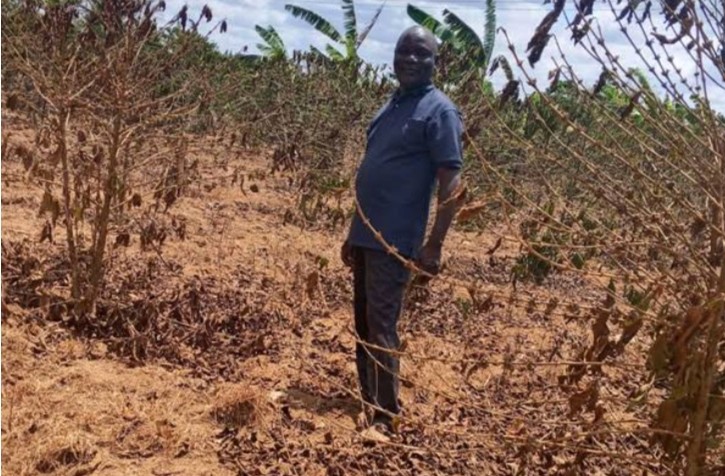
Uganda: coffee trees on a farm without irrigation after a prolonged dry spell. Photo: Kickstart International.
No single organization sees this whole picture. Together, our members do. Fifteen organizations working across Africa, Asia, and Latin America can surface what farmers face in real time, compare what works, and move that knowledge faster than any of us could alone. As El Niño gathers pace and the climate crisis ramps up, smallholder needs will escalate faster than any one organization or program can respond to.
That is one of the motivations for building our Regen Toolkit: case studies from practitioners who have tested regenerative practices in the field, covering what worked, what failed, and what it takes to scale. It puts answers in the open for anyone ready to act, and will grow as our members learn.
The longer-term answer must build for resilience. Smallholders need affordable, flexible finance; locally relevant technical knowledge and extension services; quality seed; market access; secure land rights; and regenerative practices and technologies that work in their contexts.
Regenerative agriculture and resilient smallholder systems are not slogans for this crisis. They are risk management for the next one and security for food systems.
Explore the case studies at the Regen Toolkit and reach out to learn more.
←
Learning Hub
Climate Action for
Smallholders Coalition
